Hey guys, Traffic Insider here, your trusted guide through the intricate world of finance. We’re on the cusp of 2026, a year poised for remarkable technological shifts and evolving market dynamics. Today, we’re diving deep into a topic many find alluring yet intimidating: Intraday Trading. Specifically, how to approach it safely, strategically, and successfully in the coming year. Forget the myths; it’s time for verified calculations, systematic guidelines, and crystal-clear risk disclosures to empower your personal finance decisions.
The allure of quick profits within a single trading day can be strong, but without a solid foundation, it’s a high-stakes gamble. My mission is to equip you with the knowledge to navigate these waters like a pro. Let’s unmask the core principles of Stock Market Basics and set you on a path to safe intraday trading in 2026.
Understanding Intraday Trading: The 2026 Perspective
What is Intraday Trading?
At its core, intraday trading refers to the practice of buying and selling financial instruments within the same trading day. All positions are closed before the market closes, meaning no positions are held overnight. This strategy aims to capitalize on short-term price movements and market volatility. In 2026, with increasingly sophisticated algorithms and real-time data feeds, the speed and precision required for success are more pronounced than ever.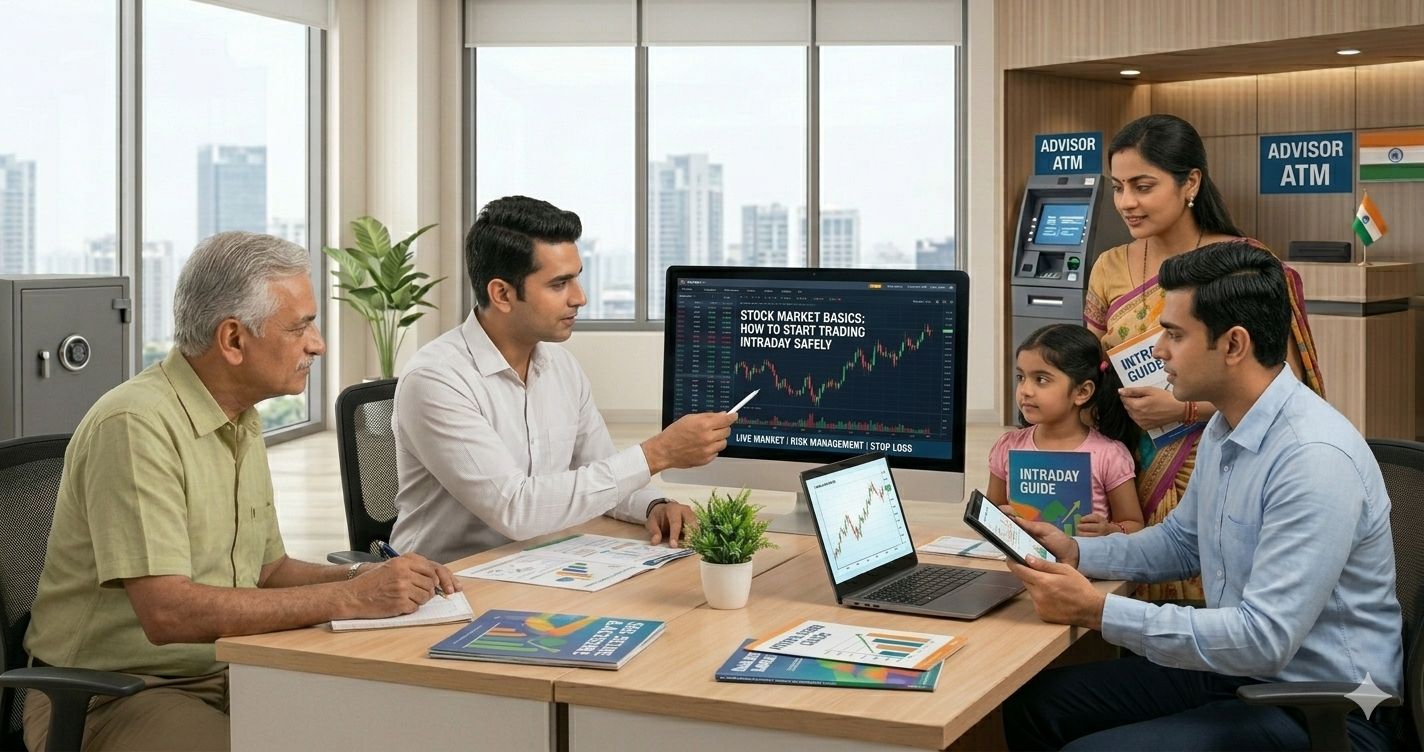
Why Consider Intraday Trading in 2026?
The financial landscape of 2026 presents unique opportunities and challenges. Here’s why some are drawn to intraday trading:
- Potential for Quick Gains: Unlike long-term investing, intraday trading offers the possibility of generating returns within hours.
- No Overnight Risk: By closing all positions before market close, traders avoid the risks associated with unexpected overnight news or events that can drastically impact stock prices.
- Leverage Opportunities: Many brokers offer higher leverage for intraday trades, amplifying potential profits (and losses).
- Technological Advancement: Enhanced trading platforms, AI-driven analytics, and ultra-low latency execution make precise entries and exits more achievable for the disciplined trader in 2026.
However, it’s crucial to understand that these benefits come with significant risks, which we will thoroughly address.
The Absolute Essentials Before You Begin: Traffic Insider’s Checklist
Before you even think about placing your first trade, lay a solid foundation. This isn’t optional; it’s mandatory for safe intraday trading.
Foundational Knowledge & Education
The market is a battlefield of information. Arm yourself with knowledge:
- Market Mechanics: Understand how orders are placed, executed, and settled. Learn about bid/ask spreads, market depth, and various order types (limit, market, stop-loss).
- Technical Analysis: Master chart patterns, indicators (Moving Averages, RSI, MACD, Bollinger Bands), and volume analysis. These are your tools for predicting short-term price movements.
- Risk Management Principles: This is paramount. You need a deep understanding of how to protect your capital.
- Continuous Learning: Markets evolve. Stay updated on economic news, technological innovations impacting sectors, and new trading strategies relevant to 2026.
Capital Allocation: The Golden Rule of 2026
Only ever trade with capital you can afford to lose. Seriously. This is non-negotiable for personal finance decisions. Here’s why:
- Emotional Detachment: Trading with ‘survival’ money leads to emotionally driven decisions, which are almost always poor decisions.
- Risk Budgeting: Segregate a specific amount for trading. This capital should be distinct from your emergency fund, retirement savings, or other long-term investments.
- Initial Capital for Intraday: While there’s no fixed amount, many successful intraday traders recommend starting with at least $500 – $1,000 for realistic practice, allowing for some buffer against early losses and commission fees. For meaningful gains, consider starting with $5,000 – $10,000, assuming you have a robust strategy.
Choosing the Right Brokerage in 2026
Your broker is your gateway to the market. Choose wisely, considering these factors for 2026 trading guidelines:
- Regulatory Compliance: Ensure the broker is regulated by relevant authorities (e.g., SEC/FINRA in the US, FCA in the UK, SEBI in India).
- Fees and Commissions: Intraday trading involves frequent transactions. Low commissions and tight spreads are vital for profitability. Compare flat fees vs. per-share fees.
- Trading Platform & Tools: Does it offer real-time data, advanced charting, fast execution, and access to necessary indicators? Look for platforms with robust mobile and desktop versions.
- Leverage/Margin: Understand the margin requirements and associated risks. Be cautious with excessive leverage.
- Customer Support: Responsive and knowledgeable support is crucial when issues arise, especially during live trading.
Traffic Insider’s Verified Steps to Start Intraday Trading Safely in 2026
Here’s a systematic, step-by-step approach to get you started on your intraday trading journey, emphasizing safety and discipline.
Step 1: Education and Practice (Simulation)
Before risking a single dollar, immerse yourself in simulated trading. This is where you learn without financial repercussions.
- Paper Trading: Use a demo account offered by most brokers. Treat it like real money. This builds muscle memory for execution and strategy testing.
- Backtesting: Apply your strategies to historical data to see how they would have performed. This helps refine your entry/exit rules.
- Market Replay: Some advanced platforms offer market replay features, allowing you to re-live past trading days and practice in real-time conditions.
Step 2: Develop a Trading Plan (Blueprint for Success)
A detailed trading plan is your roadmap. Deviate from it at your peril.
- Entry Criteria: What specific conditions (e.g., indicator signals, price action) must be met before you enter a trade?
- Exit Criteria: Define your profit target (where you will take profits) and, critically, your stop-loss (maximum acceptable loss).
- Risk Per Trade: Determine the maximum percentage of your capital you are willing to lose on any single trade (e.g., 1-2%).
- Preferred Instruments: Focus on a few stocks or ETFs initially. Understand their volatility and liquidity.
- Trading Hours: Identify the best times to trade (often market open and close due to higher volatility).
Step 3: Risk Management is Non-Negotiable
This is arguably the most critical aspect of safe intraday trading. Without it, you are doomed.
- Position Sizing: Based on your capital and risk per trade, calculate the exact number of shares you can buy. For example, if you have $10,000 and risk 1% ($100) per trade, and your stop-loss is $0.50 below entry, you can buy 200 shares ($100 / $0.50).
- Strict Stop-Loss Orders: Always use a hard stop-loss. This limits your downside. Never “hope” a losing trade will turn around.
- Don’t Overleverage: While leverage can amplify gains, it equally amplifies losses. Be conservative with margin, especially as a beginner.
- Diversification (within intraday): Don’t put all your capital into a single high-risk trade. Spread your risk across different, well-researched opportunities.
Step 4: Technical Analysis & Market Indicators (2026 Tools)
In 2026, advanced charting and indicators are your best friends for identifying patterns and momentum.
- Candlestick Patterns: Learn to read bullish and bearish patterns for potential reversals or continuations.
- Moving Averages (MA): Use MAs (e.g., 9-period, 20-period, 50-period) to identify trends and dynamic support/resistance levels.
- Relative Strength Index (RSI): Identify overbought or oversold conditions.
- Moving Average Convergence Divergence (MACD): A momentum indicator that shows the relationship between two moving averages of a security’s price.
- Volume: Always confirm price action with volume. High volume often validates a price move.
Step 5: Execute and Review (Iterative Process)
Discipline in execution and a commitment to learning are key.
- Follow Your Plan: Execute trades precisely according to your predefined entry, exit, and stop-loss rules. Avoid impulsive decisions.
- Trade Journal: Document every trade: entry/exit points, reasons for trade, profit/loss, and emotions. This is invaluable for identifying patterns in your own trading behavior.
- Review and Adapt: Regularly analyze your journal. What worked? What didn’t? Adjust your strategy based on objective data, not feelings.
Critical Risk Disclosures for Intraday Traders in 2026
Traffic Insider insists on absolute transparency. Intraday trading is high-risk. Understand these disclosures fully.
Volatility & Leverage Traps
- Amplified Losses: While leverage can boost gains, it equally amplifies losses. A small adverse price movement can quickly wipe out a significant portion of your capital, or even lead to a margin call.
- Rapid Market Shifts: Geopolitical events, unexpected corporate news, or macroeconomic data releases can cause sudden, sharp price movements. These can trigger stop-losses or lead to significant losses before you can react.
Psychological Pitfalls
- Greed and Fear: These are the two biggest enemies of any trader. Greed can lead to holding onto winning trades too long, turning them into losers. Fear can cause you to exit profitable trades too early or panic sell.
- FOMO (Fear Of Missing Out): Chasing trades because you see others profiting is a surefire way to lose money. Stick to your plan.
- Overtrading: The constant desire to be in the market can lead to taking subpar trades, eroding capital through commissions and small losses.
Market Impact & Slippage
- Slippage: In fast-moving markets, the price at which your order is executed may differ from the price you intended, especially with market orders. This difference is called slippage.
- Liquidity Issues: Trading illiquid stocks can be risky. You might struggle to enter or exit positions at desirable prices, leading to wider bid-ask spreads and significant slippage.
Data Comparisons for Personal Finance Decisions (2026 Perspective)
To put intraday trading into perspective for your broader personal finance decisions in 2026, let’s compare it with a more traditional investment approach: long-term investing.
| Feature | Intraday Trading | Long-Term Investing |
|---|---|---|
| Time Horizon | Minutes to hours (positions closed daily) | Months to years (positions held overnight) |
| Risk Level | Very High (due to leverage, volatility) | Moderate to High (depends on assets, market conditions) |
| Required Skill | Advanced technical analysis, strict discipline, quick decision-making | Fundamental analysis, macroeconomic understanding, patience |
| Capital Needed | Significant starting capital for meaningful returns (e.g., $5k-$10k+) | Can start with smaller amounts and dollar-cost average |
| Expected Return | Potentially high daily percentage gains, but highly inconsistent | Steady, compounding returns over time, aligned with economic growth |
| Psychological Demand | Extremely high (stressful, requires emotional control) | Moderate (requires patience, ability to ride out downturns) |
| Suitability | Experienced traders with high-risk tolerance and dedicated time | Most individuals seeking wealth accumulation over time |
This comparison should make it clear: intraday trading is a specialized, demanding venture. For most, a blend of long-term investing for core wealth building and perhaps a small, high-risk allocation for speculative trading (if desired) is the most prudent approach.
There you have it—your comprehensive guide to navigating Stock Market Basics and venturing into safe intraday trading in 2026. This isn’t a get-rich-quick scheme; it’s a skill that demands relentless education, unwavering discipline, and ironclad risk management. The future of finance in 2026 is bright for those who are prepared and cautious.
My hope is that this guide from Traffic Insider empowers you to make informed, data-driven decisions. Start with simulation, hone your strategy, manage your risks like a professional, and always, always keep learning. The market is a powerful force; respect it, and it might just reward you. What are your biggest challenges or questions about starting intraday trading? Share your thoughts below!
Frequently Asked Questions About Intraday Trading in 2026
Do I need a large amount of capital to start intraday trading in 2026?
While you can theoretically start with a few hundred dollars, for meaningful practice and to mitigate the impact of commissions and initial losses, it’s often recommended to start with at least $1,000 in a paper trading account, and realistically $5,000 to $10,000 for live trading to manage risk effectively and pursue reasonable profit targets. The specific amount depends on your risk tolerance and the market you are trading.
What is the Pattern Day Trader (PDT) rule and how does it affect me in 2026?
The Pattern Day Trader (PDT) rule, enforced by FINRA in the United States, states that if you execute four or more day trades within five business days in a margin account, and your day trading activities exceed 6% of your total trading activity for that period, you will be labeled a PDT. Once labeled, you must maintain a minimum equity of $25,000 in your account. If your balance drops below this, you cannot day trade until you deposit more funds. This rule is expected to remain in effect in 2026 and primarily affects smaller accounts.
Is intraday trading suitable for everyone?
Absolutely not. Intraday trading is a high-stress, high-risk activity that requires significant time commitment, emotional control, and a deep understanding of market dynamics. It is best suited for individuals who can dedicate several hours a day, have a high-risk tolerance, possess strong analytical skills, and are prepared to endure frequent losses as part of the learning curve. For most people, long-term investing remains the most effective path to wealth accumulation.
How important is a trading plan for intraday trading?
A trading plan is critically important; it is your blueprint for success. Without a clear plan outlining your entry/exit points, risk limits, and position sizing, you are essentially gambling. The plan helps remove emotional decisions, ensures consistency, and provides a framework for analyzing your performance and making data-driven adjustments.
What technological advancements should I be aware of for intraday trading in 2026?
In 2026, expect continued advancements in AI and machine learning for predictive analytics, ultra-low latency trading platforms, enhanced algorithmic trading capabilities for retail investors, and better integration of macroeconomic data into real-time analysis tools. Staying updated on these technologies can give you an edge, but they also require a deeper understanding to leverage effectively.
Written by Traffic Insider
Official editorial intelligence team. We monitor, cross-verify, and publish high-utility reviews, guides, job alerts, and scheme parameters under strict factual verification guidelines.