Hey guys, Traffic Insider here, and if you’re reading this, chances are you’re looking to supercharge your fitness journey in 2026. The world of wearable technology has evolved at a breathtaking pace, and today, a smartwatch isn’t just a gadget on your wrist – it’s your personal trainer, health monitor, and data analyst rolled into one sleek package. But with so many advanced options on the market, choosing the *right* one for your specific fitness needs can feel like a marathon in itself.
Fear not, because as your trusted authority in tech trends and smart purchasing decisions, I’ve delved deep into the cutting-edge of 2026’s offerings. This definitive Smartwatch Buying Guide is meticulously crafted to help you navigate the features, specifications, and ecosystems to find your perfect fitness companion. Get ready to transform your workouts, optimize your recovery, and understand your body like never before!
Why Your Smartwatch is Your Ultimate 2026 Fitness Companion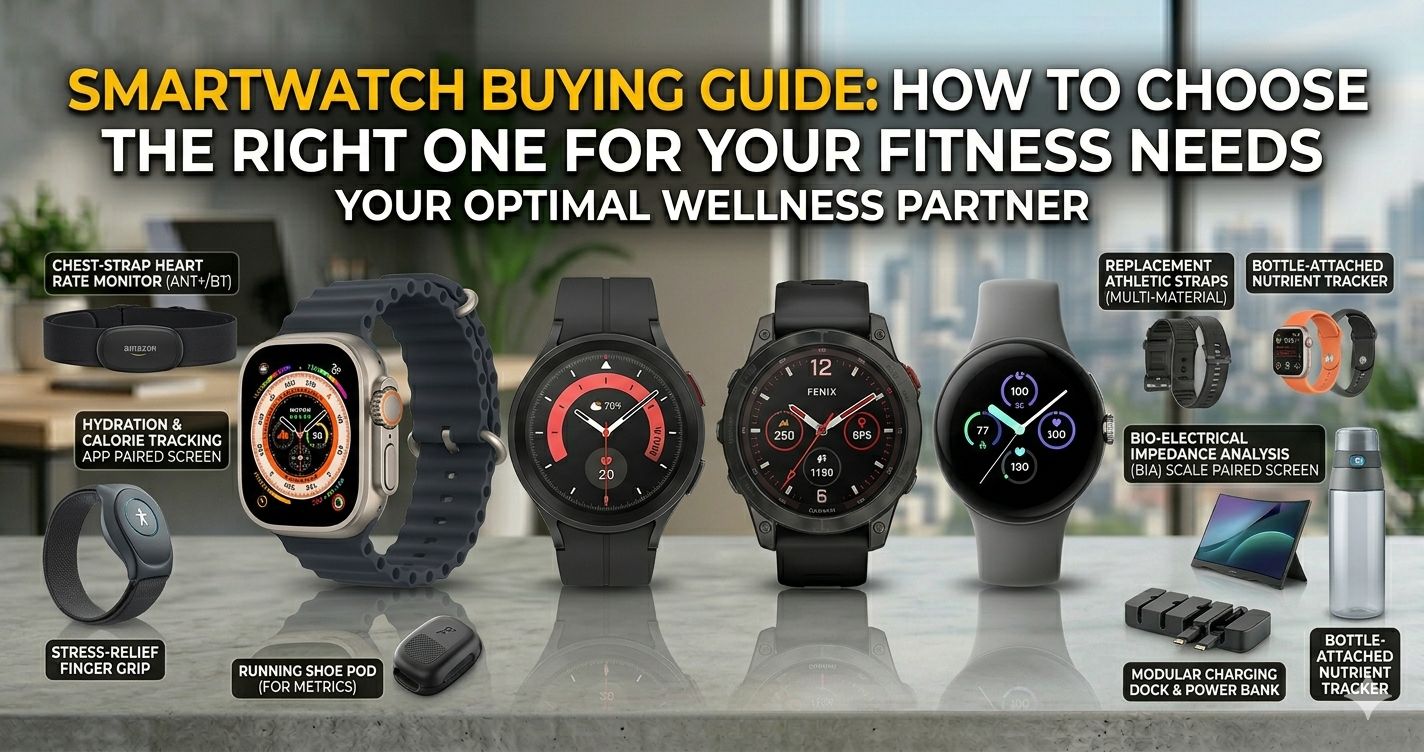
In 2026, smartwatches have transcended simple step counting. They are sophisticated, miniature health labs on your wrist, capable of providing real-time biometric data, advanced training insights, and even predictive health analytics. For anyone serious about their physical well-being, a well-chosen fitness smartwatch is no longer a luxury but an indispensable tool. From monitoring your heart health during high-intensity interval training (HIIT) to ensuring optimal sleep recovery, these devices are designed to empower you with actionable data for a healthier, more active life.
Decoding Your Fitness Needs: What Kind of Athlete Are You?
Before diving into specs, identify your primary fitness profile. This will significantly narrow down your choices and ensure you invest in a device that truly serves your purpose.
Casual Fitness Enthusiast
You enjoy regular walks, occasional gym sessions, and want general health insights. You need reliable activity tracking, basic heart rate monitoring, and solid sleep tracking. Connectivity and convenience for notifications are a bonus. Aesthetics and a user-friendly interface are often key.
Dedicated Gym-Goer & Runner
Your routine involves structured workouts, running, cycling, or group fitness classes. You require accurate GPS tracking, advanced training metrics like VO2 Max, training load, and recovery recommendations. Durability, long battery life, and integration with third-party fitness apps are crucial.
Outdoor Adventurer & Multisport Athlete
You conquer trails, swim oceans, climb mountains, and participate in triathlons. Your demands are extreme: multi-band GPS accuracy, exceptional battery life (often measured in weeks), extreme durability (water, shock, temperature resistance), barometric altimeter, compass, advanced navigation features, and specific sport modes (e.g., open water swimming, backcountry skiing).
Key Features to Prioritize in Your 2026 Fitness Smartwatch
The tech landscape of 2026 offers incredible advancements. Here’s what you should look for:
Advanced Biometric Sensors & Accuracy
- Heart Rate Monitoring (HRM): Optical sensors are standard, but look for improved multi-LED configurations for better accuracy during intense exercise. ECG (Electrocardiogram) for detecting irregular heart rhythms (Afib) and Blood Oxygen (SpO2) monitoring for respiratory health and sleep apnea insights are now commonplace.
- GPS & Location Tracking: Standard GPS accuracy has improved, but for demanding outdoor activities, prioritize devices with multi-band GNSS (Global Navigation Satellite System) support (L1+L5 for GPS, GLONASS, Galileo, BeiDou). This offers unparalleled precision, even in challenging environments like urban canyons or dense forests.
- Sleep & Recovery Tracking: Beyond basic sleep stages, 2026 watches offer sophisticated algorithms analyzing Heart Rate Variability (HRV), skin temperature, and even nocturnal blood oxygen to provide a comprehensive Recovery Readiness Score.
- Body Composition Analysis (BIA): Integrated BIA via electrodes on the watch casing can provide estimates for body fat percentage, skeletal muscle mass, and body water, offering a holistic view of your physical changes.
- Skin Temperature Sensing: Valuable for illness detection, menstrual cycle tracking, and deeper sleep analysis.
Battery Life: Endurance for Your Endeavors
This is a critical differentiator. Depending on your usage, expect:
- Daily Charging: Common for full-featured smartwatches with bright AMOLED displays and heavy usage (e.g., Apple Watch, Pixel Watch). Typically 18-36 hours.
- Multi-Day (3-7 days): Achievable with optimized software, efficient processors, and often smaller displays or less intensive sensor use.
- Weeks (10+ days up to a month): Primarily found in dedicated sports watches (e.g., Garmin Fenix series) utilizing transflective displays and massive batteries, especially in power-saver modes.
Consider how often you’re willing to charge. Heavy GPS tracking and always-on displays significantly reduce battery longevity.
Durability & Water Resistance
- Materials: Look for premium materials like aerospace-grade titanium, stainless steel, and sapphire crystal glass for scratch resistance.
- Water Resistance: Measured in ATM (atmospheres) or meters. For swimming, 5 ATM (50 meters) is generally sufficient. For diving or extreme water sports, look for 10 ATM (100 meters) or more, with specific certifications like EN 13319 for dive computers.
Display & User Experience
- Display Type: AMOLED offers vibrant colors and deep blacks, ideal for smart features. Transflective Memory-in-Pixel (MIP) displays (often found in Garmin) are excellent for outdoor visibility and extreme battery life, even if less visually striking. MicroLED is emerging as a high-end option offering both brightness and efficiency.
- Responsiveness: A smooth, fluid interface is key. Advanced processors ensure lag-free navigation and quick data processing.
Ecosystem & App Support
- Phone Compatibility: Ensure seamless integration with your smartphone (iOS or Android).
- Third-Party Apps: Access to a wide range of fitness, navigation, payment, and smart home apps enhances utility. Apple’s App Store and Google’s Play Store (for Wear OS) offer the broadest selection.
Advanced Training Metrics & Recovery Insights
For serious athletes, these features are invaluable:
- VO2 Max: A key indicator of cardiovascular fitness.
- Training Load & Effect: Understand how your workouts impact your body and guide future training intensity.
- Recovery Time & Readiness Score: AI-driven insights to prevent overtraining and optimize performance.
- Running Dynamics: Metrics like cadence, stride length, ground contact time, and vertical oscillation to improve running form.
- AI-Driven Personalized Coaching: Many 2026 models integrate advanced AI to offer personalized workout suggestions and adapt plans based on your performance and recovery data.
2026 Top Smartwatch Contenders for Fitness: A Deep Dive
Here’s a comparison of leading fitness smartwatches in 2026, tailored for different user profiles. Note: Specific model names (e.g., Ultra X) are placeholders for expected 2026 generations.
| Feature/Model | Apple Watch Ultra X (2026) | Samsung Galaxy Watch Ultra 7 (2026) | Garmin Fenix 8 Pro (2026) | Google Pixel Watch 4 (2026) | Fitbit Charge 7 (2026) |
|---|---|---|---|---|---|
| Target User | Premium All-Rounder, iPhone users, Serious Athletes | Premium Android User, Health & Fitness Focused | Outdoor & Multisport Extremist, Data Junkie | Google Ecosystem User, Balanced Fitness & Smart Features | Casual Fitness, Health Monitoring, Budget-Conscious |
| Display Type | MicroLED Retina (Always-On) | Super AMOLED (Always-On) | Transflective MIP (Solar Charging) | AMOLED (Always-On) | AMOLED Color |
| Battery Life (Typical) | 36-48 hours (Standard), 60+ hours (Low Power) | 48-72 hours (Standard) | 25-30 days (Smartwatch), 100+ hours (GPS) | 24-36 hours | 7-10 days |
| GPS Accuracy | Dual-Frequency L1+L5 GNSS | Dual-Frequency L1+L5 GNSS | Multi-Band (L1+L5) GNSS | Dual-Frequency L1+L5 GNSS | Standard GPS (Connected via Phone for full detail) |
| Key Fitness Sensors | HRM (Multi-LED), ECG, SpO2, Temp, Crash Detect, Advanced Fall Detect | HRM, ECG, SpO2, Temp, BIA, Fall Detect | HRM, ECG, SpO2, Temp, Barometer, Altimeter, Compass, HRV Status | HRM, ECG, SpO2, Temp, Fitbit Integration | HRM, SpO2, Temp, Basic Activity |
| Advanced Metrics | Running Power, Zone Training, Custom Workouts, Recovery Insights | Personalized Heart Rate Zones, Body Composition, Sleep Coaching | Training Readiness, VO2 Max, ClimbPro, Stamina, PacePro, Heat Acclimation, Jet Lag Advisor | Active Zone Minutes, Daily Readiness Score, Stress Management | Active Zone Minutes, Sleep Score, Stress Score |
| Water Resistance | 100m, EN13319 Dive Certified | 50m | 100m | 50m | 50m |
| Build Material | Titanium, Sapphire Front Crystal | Titanium/Stainless Steel, Sapphire Crystal | Titanium/Stainless Steel, Sapphire/Power Glass | Stainless Steel, Gorilla Glass | Aluminum, Gorilla Glass |
| Ecosystem | watchOS, Apple Health, Extensive App Store | Wear OS, Samsung Health, Google Play Store | Garmin Connect, Proprietary OS, Dedicated Sports Apps | Wear OS, Fitbit, Google Health Connect | Fitbit App, Google Health Connect |
| Expected Price Range (2026) | $799 – $1099 | $449 – $649 | $799 – $1199 | $349 – $449 | $159 – $209 |
Pros and Cons of Leading Smartwatch Platforms (2026 Perspective)
watchOS (Apple Watch)
- Pros: Unparalleled ecosystem integration with iOS, vast third-party app support, leading health features (ECG, advanced fall detection, excellent emergency services), premium build quality, intuitive interface. The Ultra X offers extreme ruggedness and superior battery.
- Cons: Exclusively for iPhone users, generally higher price point, battery life on standard models can still be a daily concern for some.
Wear OS (Google/Samsung Galaxy Watch, Google Pixel Watch)
- Pros: Best for Android users, excellent integration with Google services, strong third-party app ecosystem via Google Play Store, Samsung’s BIA sensor is unique, Fitbit integration for robust health tracking on Pixel Watch.
- Cons: Historically, battery life has been a challenge, though significantly improved in 2026. Still requires more frequent charging than dedicated sports watches. Fragmentation in feature sets between manufacturers.
Garmin OS (Garmin Fenix, Forerunner series)
- Pros: Unrivaled battery life, industry-leading GPS accuracy (multi-band GNSS), comprehensive advanced training metrics for virtually any sport, extreme durability, robust navigation features, excellent companion app (Garmin Connect).
- Cons: More utilitarian design (less “smartwatch” aesthetic), app ecosystem is more niche, display technology (MIP) is less vibrant than AMOLED, generally higher price for top-tier models.
Fitbit OS (Fitbit Charge, Sense series)
- Pros: Excellent for holistic health and wellness tracking (sleep, stress, activity), strong community features, affordable entry point, good battery life for fitness trackers, user-friendly app.
- Cons: Limited “smart” features compared to full smartwatches, fewer third-party apps, GPS often relies on connected phone for better accuracy on lower-end models.
Final Buyer Verdict: Your 2026 Smartwatch Decision
Choosing the best fitness smartwatch for 2026 boils down to aligning your budget with your specific fitness demands and existing tech ecosystem.
- For the iPhone user who wants the best of everything: The Apple Watch Ultra X (2026) is the undisputed champion. It offers supreme durability, comprehensive health features, excellent sports tracking, and seamless integration with your iPhone.
- For the Android power user focused on health and balanced features: The Samsung Galaxy Watch Ultra 7 (2026) is your prime candidate. Its advanced sensors (like BIA) combined with Wear OS deliver a powerful experience.
- For the hardcore athlete, adventurer, or multisport enthusiast: Look no further than the Garmin Fenix 8 Pro (2026). Its unparalleled battery life, extreme durability, and professional-grade tracking metrics make it second to none.
- For the Google ecosystem user who values health with smart features: The Google Pixel Watch 4 (2026) offers a sleek design, tight Google integration, and robust Fitbit health tracking.
- For budget-conscious individuals prioritizing fundamental health tracking: A device like the Fitbit Charge 7 (2026) offers exceptional value for monitoring activity, sleep, and overall wellness.
Remember, your smartwatch is an investment in your health. Don’t just buy a gadget; buy a partner that will motivate you, inform you, and push you towards your fitness goals. Evaluate your real needs, consider the pros and cons, and make an informed decision. The right wearable tech can truly unlock your full potential in 2026!
Frequently Asked Questions (FAQ)
How long should a good fitness smartwatch’s battery last in 2026?
For full-featured smartwatches with AMOLED displays and heavy usage (GPS, always-on display), expect 1.5 to 3 days. Dedicated sports watches with transflective displays can last 2-4 weeks in smartwatch mode and several days even with continuous GPS. Always check the specific usage claims for the model you’re interested in.
Is a smartwatch’s heart rate monitor accurate enough for serious training?
Yes, by 2026, optical heart rate monitors in premium smartwatches (especially those with multi-LED arrays) have become highly accurate for most activities, including high-intensity workouts. For extremely precise data during specific exercises or medical-grade monitoring, a chest strap HR monitor connected via Bluetooth or ANT+ may still offer a marginal edge, but it’s rarely necessary for the average user.
Do I need cellular connectivity on my fitness smartwatch?
It depends on your preference. Cellular (LTE) connectivity allows your smartwatch to make calls, send texts, stream music, and use apps independently of your phone. This is great for leaving your phone behind during runs or swims. If you always carry your phone, or only need basic notifications and GPS, then a GPS-only model will save you money on both the watch and monthly service fees.
Will my 2026 smartwatch be “future-proof”?
While no tech is truly future-proof, a high-quality 2026 smartwatch with advanced sensors (multi-band GPS, comprehensive HR/ECG/SpO2), a capable processor, and a robust software ecosystem (like watchOS, Wear OS, or Garmin OS) will likely remain highly functional and supported for 3-5 years. Focus on core features and reputable brands known for software updates.
What’s the best smartwatch for fitness on a budget in 2026?
For excellent value, consider advanced fitness trackers like the Fitbit Charge 7, or entry-level models from brands like Amazfit or even older generation premium smartwatches from Apple or Samsung if you don’t need the absolute latest features. Prioritize essential sensors (HR, GPS) and solid app support over luxury features.
Written by Traffic Insider
Official editorial intelligence team. We monitor, cross-verify, and publish high-utility reviews, guides, job alerts, and scheme parameters under strict factual verification guidelines.