Hey guys, Traffic Insider here! We’re hurtling towards 2026 at an incredible pace, and with each passing year, the landscape of technology shifts dramatically. For students, a reliable, performant, yet affordable laptop isn’t just a convenience – it’s an absolute necessity. Forget the days of slow, clunky machines; by 2026, even budget laptops for students are packing serious punch.
The eternal question persists: Performance vs. Price. How do you strike that perfect balance without breaking the bank? As your go-to authority on tech insights, I’ve meticulously analyzed the projected market trends, future processor architectures, and evolving student needs to bring you the definitive guide for purchasing the best budget student laptop in 2026. Let’s dive deep into what truly matters.
Understanding the 2026 Student Computing Landscape
By 2026, the demands on student laptops will have evolved significantly. While core tasks like word processing, web browsing, and presentations remain, students will also be engaging with more resource-intensive applications for:
- Advanced research and data analysis
- Collaborative multimedia projects
- Light to moderate content creation (video editing, graphic design)
- Cloud-native applications and AI-driven tools
- High-fidelity streaming and casual gaming
This means a budget laptop for 2026 can no longer afford to compromise on fundamental performance metrics like CPU power, RAM, and SSD speed. Efficiency and portability will also be paramount for students constantly on the move between lectures, libraries, and dorms.
Key Considerations for 2026 Budget Laptops: Performance vs. Price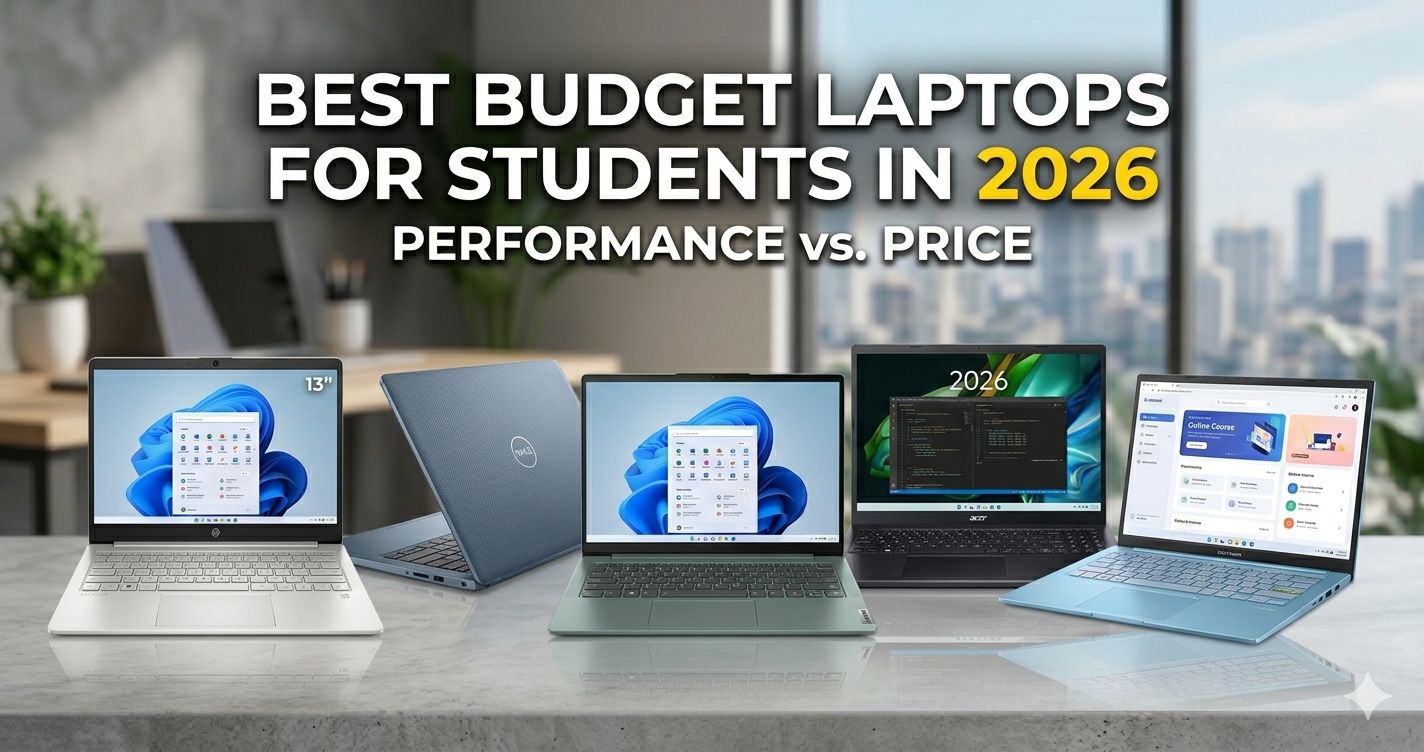
When you’re hunting for the best value laptop for students in 2026, these are the critical specifications and features to prioritize:
Processor Power: The Brains of Your Budget Beast
By 2026, Intel’s ‘Core Ultra’ branding will be well-established, and AMD’s Ryzen will continue its strong competition. For a truly budget-friendly yet capable machine, look for:
- Intel Core Ultra 3 or Core Ultra 5 (Lunar Lake/Arrow Lake equivalent): These will offer excellent single-core performance, improved integrated graphics (Xe-LPG/Arc Alchemist iGPUs), and dedicated neural processing units (NPUs) for AI tasks, becoming increasingly relevant for future applications.
- AMD Ryzen 5 (Zen 5/6 based): AMD’s budget Ryzen 5 series will deliver exceptional multi-core performance, perfect for multitasking, and highly capable RDNA 3.5/4 integrated graphics for multimedia and light gaming.
- Qualcomm Snapdragon X Plus/Elite (Derivatives): ARM-based processors will have made significant inroads, offering phenomenal battery life and silent operation. Compatibility with all Windows apps will have vastly improved.
Aim for at least 6-8 cores (hybrid architectures count differently) and clock speeds over 3.0 GHz for a smooth experience.
RAM and Storage: The Multitasking Backbone
- RAM (Memory): 8GB DDR5 RAM should be considered the absolute minimum for 2026. However, if your budget stretches, 16GB DDR5 RAM will provide significant headroom for future applications and intensive multitasking, making it a truly future-proof investment. LPDDR5X will also be prevalent for improved efficiency.
- Storage (SSD): A fast 256GB NVMe SSD is the bare minimum. Ideally, target a 512GB NVMe SSD for sufficient space for the OS, essential software, and student files, providing blazing-fast boot times and application loading. Avoid eMMC storage at all costs.
Display Quality: Your Window to the Digital World
- Resolution: A Full HD (1920×1080) IPS display is non-negotiable. IPS panels offer wide viewing angles and better color accuracy than TN panels, crucial for group work and comfortable viewing.
- Brightness: Look for at least 250-300 nits of brightness for comfortable indoor use.
- Size: 13.3-inch to 15.6-inch are the most common and practical sizes for students.
- Touchscreen/Stylus Support: While not mandatory for budget, increasing availability means some models might offer this, enhancing note-taking and interactivity.
Battery Life & Portability: Essential for On-the-Go Students
- Battery Life: Aim for at least 8-10 hours of real-world battery life on a single charge. This is crucial for students who don’t always have access to power outlets.
- Weight & Build: Laptops under 1.5 kg (3.3 lbs) are ideal for daily carrying. Look for durable, well-constructed chassis, even in budget categories, to withstand the rigors of student life. USB-C charging will be standard and highly convenient.
Connectivity & Operating System
- Ports: At least one USB4 (Thunderbolt 4 equivalent) port will be incredibly versatile for docking, high-speed transfers, and external monitors. Multiple USB-A ports, HDMI, and a headphone jack are also desirable.
- Wireless: Wi-Fi 7 (802.11be) will be standard, offering blazing-fast and reliable wireless connectivity. Bluetooth 5.4 for peripherals.
- Operating System: Windows 11 Home will be the primary OS, with ChromeOS still offering a compelling, secure, and lightweight alternative for students whose workflow is primarily cloud-based.
Our Top Picks: Best Budget Laptops for Students in 2026
Based on our projections for 2026, here are some hypothetical yet representative models that will offer an excellent balance of performance and price for students.
1. Acer Swift Go 14 (2026 Student Edition)
The Swift Go series continues to be a darling for those seeking portability and performance on a budget. The 2026 iteration is expected to push boundaries further.
- Technical Specifications:
- CPU: Intel Core Ultra 5 150U (Lunar Lake equivalent, 8 Cores, up to 4.8 GHz, with NPU)
- RAM: 16GB LPDDR5X 7467MHz
- Storage: 512GB PCIe Gen 4 NVMe SSD
- Display: 14-inch Full HD+ (1920×1200) IPS, 300 nits, 100% sRGB
- Battery: 65 Wh, up to 12 hours of mixed use, USB-C fast charging
- Ports: 2x USB4 (Thunderbolt 4 compatible), 2x USB-A 3.2 Gen 1, 1x HDMI 2.1, 1x Headphone Jack
- OS: Windows 11 Home
- Weight: 1.25 kg (2.76 lbs)
- Absolute Feature Comparisons: Compared to many competitors in its price range, the Swift Go 14 will offer superior port selection including dual USB4 ports and a brighter, more color-accurate display. Its LPDDR5X RAM speed will also be a differentiator.
- Pros:
- Excellent balance of portability, power, and battery life.
- Vibrant display perfect for multimedia and productivity.
- Robust connectivity with dual USB4.
- Strong AI capabilities with integrated NPU.
- Cons:
- Keyboard might feel slightly less premium than higher-end models.
- Integrated graphics, while good, won’t handle demanding AAA gaming.
- Final Buyer Verdict: The Acer Swift Go 14 (2026) will be an unparalleled choice for students needing a lightweight, powerful, and versatile machine for all academic tasks and beyond. A true performance-per-dollar champion.
2. Lenovo IdeaPad Slim 5 (2026)
Lenovo’s IdeaPad series consistently delivers robust performance and solid build quality without breaking the bank. The 2026 Slim 5 will be no exception.
- Technical Specifications:
- CPU: AMD Ryzen 5 8600HS (Zen 5-based, 6 Cores, 12 Threads, up to 5.0 GHz, RDNA 3.5 Graphics)
- RAM: 16GB DDR5 5600MHz (upgradeable)
- Storage: 512GB PCIe Gen 4 NVMe SSD
- Display: 15.6-inch Full HD (1920×1080) IPS, 250 nits, Anti-glare
- Battery: 57 Wh, up to 10 hours of battery life, USB-C charging
- Ports: 2x USB-C 3.2 Gen 2 (DisplayPort/Power Delivery), 2x USB-A 3.2 Gen 1, 1x HDMI 2.1, SD Card Reader, Headphone Jack
- OS: Windows 11 Home
- Weight: 1.65 kg (3.64 lbs)
- Absolute Feature Comparisons: The IdeaPad Slim 5 differentiates itself with a larger, more traditional screen size and user-upgradeable RAM, a rarity in this segment by 2026. Its AMD CPU provides superior multi-core performance for tasks like coding or virtual machines.
- Pros:
- Strong multi-core performance from AMD Ryzen 5.
- Larger 15.6-inch display for comfortable viewing.
- Upgradeability for RAM, extending longevity.
- Solid keyboard and build quality.
- Cons:
- Slightly heavier than 14-inch counterparts.
- Display brightness is standard, not exceptional.
- Final Buyer Verdict: For students who prioritize screen real estate, multi-core power for demanding coursework, and a degree of future-proofing through upgradeability, the Lenovo IdeaPad Slim 5 (2026) offers tremendous value for money.
3. HP Pavilion Aero 13 (2026 Budget Edition)
HP’s Pavilion Aero line has impressed with its incredibly light chassis. The 2026 budget variant will continue this trend, offering premium portability at an accessible price.
- Technical Specifications:
- CPU: Qualcomm Snapdragon X Plus (10 Cores, up to 3.4 GHz, Adreno GPU, Hexagon NPU)
- RAM: 16GB LPDDR5X 8448MHz
- Storage: 256GB PCIe Gen 4 NVMe SSD (upgradeable to 512GB at point of sale)
- Display: 13.3-inch Full HD (1920×1080) IPS, 400 nits, Low Blue Light
- Battery: 43 Wh, up to 15 hours of battery life, USB-C charging
- Ports: 2x USB-C (Power Delivery/DisplayPort), 2x USB-A 3.2 Gen 1, 1x HDMI 2.1, Headphone Jack
- OS: Windows 11 Home on ARM
- Weight: 0.97 kg (2.14 lbs)
- Absolute Feature Comparisons: The Pavilion Aero 13’s standout feature is its sub-1kg weight combined with an ARM processor, delivering unparalleled battery life and silent operation. The 400-nit display is also brighter than many budget rivals.
- Pros:
- Featherlight design, exceptionally portable.
- Phenomenal battery life, ideal for all-day use.
- Silent, fanless operation.
- Excellent bright display.
- Strong AI performance from Hexagon NPU.
- Cons:
- 256GB base storage might be tight for some.
- ARM compatibility, while improved, may still have edge cases for very specific legacy software.
- Final Buyer Verdict: For students whose priority is extreme portability and battery longevity, especially those who work primarily with cloud-based applications and modern Windows software, the HP Pavilion Aero 13 (2026) powered by Snapdragon will be a game-changer.
4. ASUS Vivobook 15 Lite (2026)
ASUS continues to offer competitive feature sets at aggressive price points with its Vivobook line. The 2026 Lite model will target maximum value.
- Technical Specifications:
- CPU: Intel Core Ultra 3 130U (Lunar Lake equivalent, 6 Cores, up to 4.5 GHz, with NPU)
- RAM: 8GB LPDDR5 6400MHz
- Storage: 256GB PCIe Gen 3 NVMe SSD
- Display: 15.6-inch Full HD (1920×1080) IPS, 250 nits
- Battery: 42 Wh, up to 8 hours of battery life
- Ports: 1x USB-C 3.2 Gen 1 (Data Only), 2x USB-A 3.2 Gen 1, 1x USB-A 2.0, 1x HDMI 1.4, Headphone Jack
- OS: Windows 11 Home (S Mode)
- Weight: 1.7 kg (3.75 lbs)
- Absolute Feature Comparisons: The Vivobook 15 Lite will likely be the most budget-friendly of the recommended options, offering the latest generation Intel Core Ultra processor at a lower price point. However, it compromises slightly on RAM and port sophistication compared to the Swift Go or IdeaPad.
- Pros:
- Most affordable entry into the latest generation CPUs.
- Large 15.6-inch display for everyday tasks.
- Good enough performance for basic productivity and web browsing.
- Cons:
- 8GB RAM is the bare minimum for 2026.
- Slower Gen 3 SSD and limited USB-C functionality.
- Heavier and less premium build.
- Windows 11 in S Mode might be restrictive initially (though easily switchable).
- Final Buyer Verdict: For students on a strictly limited budget who need a new, reliable machine for general academic work and don’t require heavy lifting, the ASUS Vivobook 15 Lite (2026) provides a foundational experience with a modern CPU.
2026 Budget Student Laptop Comparison Table
Here’s a quick overview of our top budget picks for students in 2026, comparing their core strengths:
| Feature | Acer Swift Go 14 (2026) | Lenovo IdeaPad Slim 5 (2026) | HP Pavilion Aero 13 (2026) | ASUS Vivobook 15 Lite (2026) |
|---|---|---|---|---|
| Processor | Intel Core Ultra 5 150U | AMD Ryzen 5 8600HS | Qualcomm Snapdragon X Plus | Intel Core Ultra 3 130U |
| RAM | 16GB LPDDR5X | 16GB DDR5 (Upgradeable) | 16GB LPDDR5X | 8GB LPDDR5 |
| Storage | 512GB PCIe Gen 4 NVMe | 512GB PCIe Gen 4 NVMe | 256GB PCIe Gen 4 NVMe | 256GB PCIe Gen 3 NVMe |
| Display | 14″ FHD+ IPS (300 nits) | 15.6″ FHD IPS (250 nits) | 13.3″ FHD IPS (400 nits) | 15.6″ FHD IPS (250 nits) |
| Battery Life (Est.) | ~12 hours | ~10 hours | ~15 hours | ~8 hours |
| Weight | 1.25 kg | 1.65 kg | 0.97 kg | 1.7 kg |
| Key Differentiator | Best overall balance | Upgradeable RAM, large screen | Extreme portability & battery | Most budget-friendly new CPU |
| Estimated Price (2026) | $650 – $750 | $600 – $700 | $550 – $650 | $450 – $550 |
Final Buyer’s Verdict: Navigating Your Purchase in 2026
Choosing the best budget laptop for your student needs in 2026 ultimately comes down to your personal priorities and specific academic demands. Remember, “budget” in 2026 means getting incredible capability for less than $750.
- If ultimate portability and all-day battery life are your absolute non-negotiables, the HP Pavilion Aero 13 (2026 Budget Edition) with its Snapdragon X Plus will be your best friend.
- For a superb all-rounder that blends portability with strong performance, an excellent display, and future-ready connectivity, the Acer Swift Go 14 (2026 Student Edition) is our top recommendation for the majority of students.
- If you need a larger screen, prioritize multi-core performance for coding or heavier tasks, and appreciate the option to upgrade components later, the Lenovo IdeaPad Slim 5 (2026) offers unbeatable flexibility and power.
- And for those on the tightest budget who still want a current-gen processor, the ASUS Vivobook 15 Lite (2026) offers an entry point into modern computing, though with some compromises.
No matter your choice, investing in one of these machines in 2026 means equipping yourself with a powerful, efficient tool ready to tackle the academic challenges and opportunities of the future. The era of compromise in budget laptops is over!
I hope this deep dive helps you make an informed decision. Don’t forget to keep an eye out for back-to-school sales around mid-2026 for potentially even better deals! What features are YOU most excited about in 2026 budget laptops? Let us know in the comments below!
Frequently Asked Questions (FAQ) for 2026 Budget Laptops
Q1: What defines a “budget” laptop for students in 2026?
In 2026, a “budget” laptop for students typically refers to models priced between $400 and $750 USD. These laptops are expected to offer modern processors (like Intel Core Ultra 3/5, AMD Ryzen 5, or Snapdragon X Plus), a minimum of 8GB DDR5 RAM, 256GB NVMe SSD, and a Full HD IPS display, providing excellent performance for student tasks without a premium price tag.
Q2: Is 8GB RAM enough for students in 2026?
While 8GB DDR5 RAM will be the minimum acceptable for basic student tasks like web browsing, word processing, and presentations in 2026, 16GB DDR5 RAM is strongly recommended. With the increasing complexity of web applications, AI tools, and multimedia content, 16GB will offer a significantly smoother multitasking experience and better future-proofing.
Q3: Should I choose an Intel, AMD, or ARM (Snapdragon) processor for a budget student laptop in 2026?
Each has its strengths: Intel Core Ultra processors will offer excellent single-core performance and strong AI acceleration. AMD Ryzen 5/7 will provide superior multi-core performance for heavy multitasking and competitive integrated graphics. ARM-based Snapdragon X Plus/Elite chips will excel in battery life and portability with fanless designs. Your choice depends on whether you prioritize raw speed (Intel/AMD) or extreme longevity/portability (ARM).
Q4: Will I be able to game on a budget student laptop in 2026?
Yes, to an extent. Budget laptops in 2026 with integrated graphics from Intel’s Xe-LPG/Arc Alchemist or AMD’s RDNA 3.5/4 will be capable of handling casual games, esports titles (like Valorant, CS:GO, League of Legends), and some older AAA games at lower settings. Don’t expect to run the latest graphically intensive titles smoothly, but light gaming will be perfectly feasible.
Q5: Are Chromebooks still a good option for students in 2026?
Absolutely. Chromebooks remain an excellent, highly secure, and often more affordable option for students whose workflow is primarily cloud-based. By 2026, Chromebooks will feature even more powerful processors, improved Android app compatibility, and advanced Linux support, making them very versatile for productivity and web-centric learning. However, for specific Windows-only software, a Windows laptop is still necessary.
Written by Traffic Insider
Official editorial intelligence team. We monitor, cross-verify, and publish high-utility reviews, guides, job alerts, and scheme parameters under strict factual verification guidelines.