Hey guys, Traffic Insider here, and if you’re a parent dreaming of a secure and prosperous future for your daughter, you’ve landed on the right page. As we step into 2026, one scheme consistently stands out as a beacon of hope and financial stability for every Indian girl child: the Sukanya Samriddhi Yojana (SSY). Forget the uncertainty of market fluctuations; this government-backed initiative offers unbeatable security and some of the highest interest rates available, making it the ultimate tool for building your daughter’s educational and marriage corpus. Let’s dive deep into everything you need to know about optimizing your savings with SSY for 2026!
Unlock Your Daughter’s Future: The Power of Sukanya Samriddhi Yojana in 2026
The Sukanya Samriddhi Yojana is more than just a savings account; it’s a commitment from the government to empower the girl child, encouraging families to save for her higher education and marriage expenses. Launched as part of the “Beti Bachao, Beti Padhao” campaign, SSY accounts come with a triple advantage: attractive interest rates, significant tax benefits, and government backing, ensuring your investment is safe and grows substantially over time. For 2026, the scheme remains a cornerstone of financial planning for millions, offering a robust platform to secure your daughter’s tomorrow.
Why SSY is Your Best Bet for Daughter’s Savings in 2026
- High Interest Rates: Consistently among the highest offered by any government scheme, reviewed quarterly to stay competitive.
- Tax Benefits (EEE Status): Contributions, interest earned, and maturity amount are all exempt from tax under Section 80C of the Income Tax Act, 1961. This is the coveted “Exempt-Exempt-Exempt” status.
- Government Backed Security: Your capital and interest are entirely safe, backed by the Government of India.
- Long-Term Growth: A 21-year maturity period (or until marriage after 18) allows for significant wealth accumulation through compounding.
- Financial Discipline: Encourages regular savings, instilling a habit crucial for long-term financial health.
- Empowerment for Girls: Directly contributes to securing a girl child’s future, from education to marriage.
Exact Eligibility Rules for Sukanya Samriddhi Yojana (SSY) in 2026
Understanding the eligibility criteria is the first step towards opening an SSY account. Here are the precise rules you need to adhere to in 2026:
- Girl Child Age: The account can be opened for a girl child from the time of her birth until she attains the age of 10 years.
- Indian Resident: The girl child must be an Indian resident. Non-Resident Indians (NRIs) are not eligible. If the girl child acquires NRI status after opening the account, the account will be closed.
- One Account Per Girl: Only one SSY account can be opened in the name of a single girl child.
- Family Limit: A maximum of two SSY accounts are allowed per family. However, there are exceptions:
- If the first birth results in twins or triplets, and the second birth is a single girl child, three accounts are permitted.
- If the first birth is a single girl child, and the second birth results in twins or triplets, then three accounts are permitted.
An affidavit must be submitted in case of multiple births (twins/triplets) to avail the exception.
- Guardian Operated: The account must be operated by a natural or legal guardian until the girl child attains the age of 18 years.
Dynamic Document Checklist for SSY Account Opening in 2026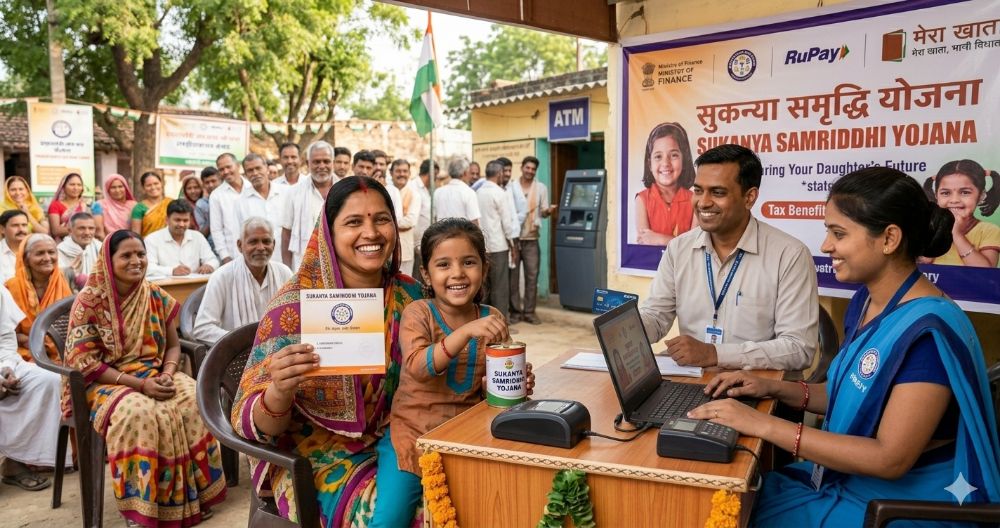
To streamline your application process in 2026, ensure you have the following documents ready. Remember, specific banks or post offices might have minor variations, but this list covers the essentials:
- Girl Child’s Birth Certificate: Mandatory proof of age and date of birth. This is the cornerstone document.
- Applicant/Guardian’s Identity Proof: (Parent or legal guardian opening the account)
- Aadhaar Card: Most widely accepted, with biometric verification often required for digital applications.
- PAN Card: Essential for financial transactions.
- Driving License
- Passport
- Applicant/Guardian’s Address Proof:
- Aadhaar Card: If address is current.
- Utility Bills (electricity, water, gas – not older than 3 months)
- Passport
- Voter ID Card
- Girl Child’s Photograph: (Usually 2 passport-sized photos, especially for physical applications).
- Medical Certificate for Multiple Children (if applicable): Required for availing the multiple girl child exception (e.g., twins/triplets).
- Other KYC Documents: As required by the specific bank or post office, which may include a recent photograph of the guardian.
Pro Tip: For online applications in 2026, ensure all documents are scanned copies in prescribed formats (PDF, JPEG) and within specified size limits. Keep originals handy for verification if required.
Step-by-Step Portal Guidelines for SSY Account in 2026
While the core process involves opening the account at authorized banks or India Post offices, 2026 sees enhanced digital integration. Here’s a general guideline for interacting with the Sukanya Samriddhi Yojana through official portals and physical touchpoints:
Opening an SSY Account (Offline/Hybrid Approach)
- Choose an Authorized Institution: Identify a post office or a public/private sector bank authorized to open SSY accounts (e.g., SBI, ICICI Bank, HDFC Bank, Punjab National Bank).
- Collect the Application Form: Obtain the SSY account opening form either from the branch or download it from the institution’s official website (e.g., India Post website or respective bank’s portal).
- Fill the Form Accurately: Provide all details of the girl child and the guardian as per documents. Ensure there are no discrepancies.
- Attach Required Documents: Affix copies of the girl’s birth certificate, guardian’s ID and address proofs, and photographs.
- Initial Deposit: Make the initial deposit (minimum ₹250, maximum ₹1.5 lakh per financial year).
- Submission and Verification: Submit the form and documents. The officials will verify them.
- Receive Passbook/Account Statement: Upon successful processing, you will receive an SSY passbook (for offline accounts) or an account statement/details for online tracking.
Managing Your SSY Account Online (2026 Digital Enhancements)
While full-fledged online account opening from scratch might still require an initial branch visit for verification, 2026 offers robust digital management for existing accounts:
- Online Deposits: Many banks and India Post offer online facilities to deposit funds into your SSY account through their internet banking portals or mobile apps. Look for “Sukanya Samriddhi Yojana Deposit” option.
- View Account Statement: Access your account statement, transaction history, and current balance through your bank’s or India Post’s digital platforms.
- Interest Rate Updates: Stay informed about the latest SSY interest rates, which are updated quarterly and published on official websites.
- No Direct Universal Portal for Opening: As of 2026, there isn’t one universal government portal to *open* an SSY account across all institutions. You typically go through the specific bank or post office’s portal or branch.
- Linking with Savings Account: Often, you can link your SSY account to your primary savings account for easy fund transfers.
Key Specifications of Sukanya Samriddhi Yojana (SSY) in 2026
Here’s a snapshot of the crucial features of the Sukanya Samriddhi Yojana that you need to be aware of for 2026, presented in an easy-to-digest table format:
| Feature | Specification (2026) |
|---|---|
| Minimum Annual Deposit | ₹250 |
| Maximum Annual Deposit | ₹1,50,000 |
| Account Opening Age | From birth until the girl child turns 10 years old |
| Deposit Period | 15 years from the date of account opening |
| Maturity Period | 21 years from the date of account opening OR until marriage of the girl child after she turns 18 (whichever is earlier) |
| Partial Withdrawal | Up to 50% of the balance after the girl child turns 18, for higher education expenses. |
| Tax Benefits | EEE (Exempt-Exempt-Exempt) – Contributions, interest, and maturity amount are all tax-exempt under Section 80C. |
| Interest Rate (Indicative for 2026) | Reviewed quarterly by the Government. Typically higher than PPF. (Refer to official GOI notifications for current rate.) |
Official Website References for Sukanya Samriddhi Yojana (2026)
Always refer to official sources for the most up-to-date information regarding interest rates, rules, and forms for the Sukanya Samriddhi Yojana. In 2026, these will be your primary trusted resources:
- Ministry of Finance, Government of India: For official scheme notifications and interest rate announcements. (Look for the Department of Economic Affairs section on their website).
- India Post Website: www.indiapost.gov.in (Navigate to ‘Savings Schemes’ for SSY details and forms.)
- Websites of Authorized Banks: Check the official portals of major public and private sector banks (e.g., State Bank of India, HDFC Bank, ICICI Bank, Punjab National Bank, Axis Bank) that offer SSY accounts. Search their ‘Personal Banking’ or ‘Government Schemes’ sections.
- National Savings Institute (NSI): www.nsiindia.gov.in (While less frequently updated for daily rates, it provides overarching scheme information).
Traffic Insider Tip: Bookmark these official sites and subscribe to their newsletters (if available) to receive timely updates on interest rate changes and policy revisions.
Your Daughter’s Bright Future Starts Now: A Motivating Conclusion
There you have it, folks! The Sukanya Samriddhi Yojana, in 2026, remains an unparalleled opportunity for every parent to invest in their daughter’s future with confidence and robust returns. The journey to securing her higher education, empowering her career aspirations, or celebrating her marriage begins with a simple, consistent step today. Don’t let procrastination dim her potential. Leverage the high interest rates, significant tax benefits, and government backing that this scheme offers.
Take action right away. Visit your nearest post office or an authorized bank, gather your documents, and open an SSY account. It’s not just about money; it’s about peace of mind, financial independence for your girl child, and a strong foundation for her dreams. What are you waiting for? Secure her tomorrow, today!
Frequently Asked Questions (FAQ) about SSY in 2026
Q1: What is the current interest rate for Sukanya Samriddhi Yojana in 2026?
The interest rate for Sukanya Samriddhi Yojana is reviewed and announced quarterly by the Government of India. While I cannot provide the exact real-time rate for a future year like 2026, it is typically one of the highest among small savings schemes. Always refer to the official notifications on the Ministry of Finance or India Post websites for the latest applicable rate.
Q2: Can I open a Sukanya Samriddhi Yojana account online?
As of 2026, while many banks and India Post offer online facilities for making deposits and viewing statements for existing SSY accounts, the initial account opening often requires a physical visit to a branch for KYC verification. Some banks might offer a hybrid online process where you can fill out the form online and then visit for final submission and verification.
Q3: What happens if I miss an annual minimum deposit for SSY?
If the minimum annual deposit of ₹250 is not made in a financial year, the account will become “defaulted.” It can be revived by paying a penalty of ₹50 for each year of default, along with the minimum deposit amount(s) for the defaulted year(s). This revival must be done before the completion of 15 years from account opening.
Q4: Can I transfer my SSY account from a Post Office to a Bank, or vice-versa?
Yes, the Sukanya Samriddhi Yojana account is transferable from one post office to another, or from a post office to a bank, and vice-versa. The account holder (guardian) needs to submit a request for transfer at the existing post office or bank branch, along with the passbook and KYC documents.
Q5: What are the tax benefits of Sukanya Samriddhi Yojana in 2026?
The SSY scheme continues to enjoy the coveted EEE (Exempt-Exempt-Exempt) status in 2026. This means that your contributions (up to ₹1.5 lakh per annum) are eligible for deduction under Section 80C, the interest earned is tax-free, and the maturity amount (including withdrawals) is also exempt from tax.
⚡ Share This Update:
Written by Traffic Insider
Official editorial intelligence team. We monitor, cross-verify, and publish high-utility reviews, guides, job alerts, and scheme parameters under strict factual verification guidelines.